Rebuilding Syria
Support our new Peace Centre in Kadesh

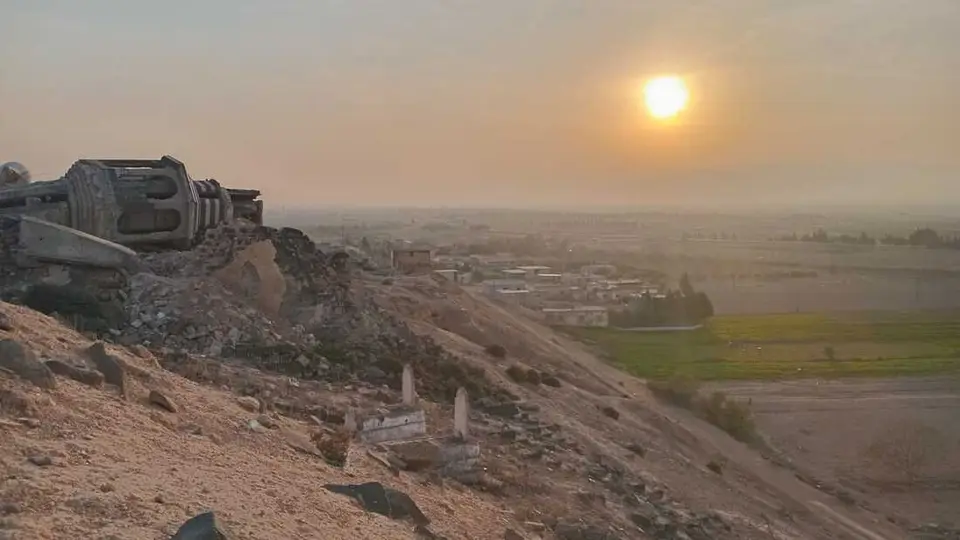
Tell Nabi Mendo, the ancient city of Kadesh in the Homs Governorate: a place of history and of resistance against the Assad regime, today the location of our first Peace Centre inside Syria
One year after the liberation of Syria from the Assad regime, we returned with those we have served for more than 12 years in Lebanon, on the other side of the border. We returned and we started to rebuild. Before the first anniversary of the fall of Assad, we met to establish the official Syrian branch of our association and we signed the rental contract for the first Peace Centre inside Syria, in the village of Tell Nabi Mendo, the ancient city of Kadesh, next to Qusayr, in the Homs Governorate.
Father Paolo Dall’Oglio walked on this ground in solidarity with the Syrian Revolution before he was expelled from Syria and then kidnapped by the so-called Islamic State (ISIS or Daech). Today, we are honouring his mission to establish peace centres along the Orontes river, in the most mixed area of Syria where Muslims and Christians of different denominations are living side by side. As for the last 12 years of our constant work in the borderlands between Lebanon and Syria, we wish to bring different groups together around a common cause: a better future for the youth.
Read more below about the visits of Paolo to this area and about our new Peace Centre. We need your support to help the Syrian youth rebuild their country, destroyed by 54 years of dictatorship and 14 years of war.
The area of Qusayr, a sacred ground
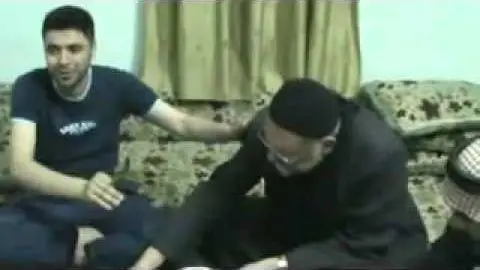
Video published by S.N.N.: Father Paolo breaking his personal fast in Qusayr on 4 June 2012, sharing a meal with local representatives of the Syrian Revolution. He was expelled because of this video.
Qusayr has a particular significance for our work. This mixed town, where a Sunni majority lives together with Christians, Shiites and Alawites, was one of the first places that stood up against the Assad dictatorship in 2011. It was also one of the first places where the struggle took a sectarian turn. Father Paolo Dall’Oglio, our co-founder and mentor, came twice to this town in 2011/12, negotiating the release of hostages and providing practical and moral support to the population besieged by the Assad regime. Because of a video published during his second stay, showing him breaking the fast with rebels, the Assad regime exiled him in June 2012.
The story didn’t end there. Qusayr was also one of the first towns forcefully retaken by Assad loyalists. It was the first place where the Lebanese Hezbollah, a proxy of the Iranian regime, openly entered the battle on Assad’s side. More than 60,000 Sunni citizens of Qusayr were killed or displaced. Most of the Syrian refugees we have served over the last 12 years in Lebanon have been from this area. Not all of them have returned yet, but the number is increasing every day. The challenges are high: years of oppression and war have left deep wounds and a field of ruins.
Seeds of hope in a destroyed country

Founding Assembly of Relief & Reconciliation in Syria as an association registered under Syrian law, with Muslim and Christian friends of Father Paolo and people who returned from Lebanon.
In the area of Qusayr, more than 85% of houses are destroyed or uninhabitable. The returning families often live in self-made tents midst in the ruins of their former homes. Most of the destruction was deliberately inflicted by the troops and loyalists of Assad after their reconquest of the area from revolutionary rebels. Many of the remaining houses were occupied by Lebanese families affiliated with Hezbollah. After the fall of Assad, the tables have turned. Almost all Shiites, Lebanese and Syrians alike, have fled into Lebanon. Alawites and Christians remain, even though under constant fear of retaliation or kidnapping. Families of the Sunni majority are now returning to the area and are trying to rebuild a country based on justice and the rule of law.
We returned to Syria in the month after the liberation from the Assad regime, together with some of the families we had served for twelve years in the refugee camps in the north of Lebanon. We followed the traces of Father Paolo and made many surprising discoveries. During one of his visits in 2012, we were told, he organised the purchase and transportation of a big generator to Ayn Al-Tannour, next to the Orontes river, from where Homs is supplied with fresh water. The siege of the rebel areas had cut off the electricity lines. Thanks to the generator Paolo brought, water was flowing again. The manager of the local water plant remembers him well.

In solidarity with the Syrian youth
We found a damaged house whose owners had fled abroad that will serve as our first Peace Centre inside Syria. Tell Nabi Mendo, the ancient city of Kadesh where the first recorded battle of human history took place, has much significance for us. It is directly located on the Orontes river, next to Qusayr. Father Paolo visited precisely this area in 2012. Before his forced disappearance, he had asked us to be ready for the fall of the Assad regime to deploy international volunteers along the Orontes, in the mixed areas where minorities will be in fear of retaliation.
Thanks to your generous support, we could conclude a rental contract and start the rehabilitation of the house. The first school-support classes shall start in January. We conducted a rapid needs assessment and we wish to provide similar services to those most in need like those we have provided in Lebanon for over twelve years. First priority is the successful integration of migrant students into local public schools. Most children returning from Lebanon or Turkey have learned math and sciences in French or in Turkish. Intensive Arabic classes are required to allow them catch up with the Syrian curriculum and years of missed opportunities.
In the following videos, you can get a first-hand impression of the surroundings and the rooftop of our new Peace Centre, just 20 m from the Orontes river:
Your donation has a direct impact
And then, the challenge of reconstruction. Thanks to the support by UNESCO through a former R&R volunteer, we are launching vocational training classes that will serve also the rehabilitation of the damaged Peace Centre. But much more needs to be done. Having concluded our first assessments, we propose an inter-community-based approach for the reconstruction of destroyed homes. People on the ground know better than anybody else who needs most support. The mechanism of this approach shall ensure that aid is provided fairly in an open and democratic process through the participation of local craftsmen and students. Priority shall be given to households headed by widows or single women without income.
You can find the concept note below with further details. This project is too big for private small donations; it will require institutional donors. However, the support from our members and friends abroad allows us to lay the foundations. We believe in the principle of poverty in humanitarian aid, whereas little means can do a lot more than big public grants, thanks to the leadership of local communities. Our international staff members, including our chairman Friedrich Bokern, are serving as volunteers without any salary or fee. We are relying on your contributions to renovate the house of the Peace Centre and pay for local teachers and other youth activities. The immediate costs for achieving these goals are about $20,000 for the coming months, besides the $10,000 we have already received from UNESCO.
Please spread the word and make a generous gesture today. Our volunteers and the youth we serve are the vanguard for a world where people are united in solidarity and hospitality despite their different convictions or belongings. You can be part of this idea, as a donor or a member or a volunteer.